 BestPriceDeal.in
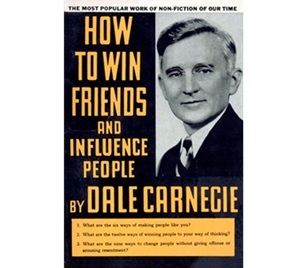
How to Win Friends and Influence People by Dale Carnegie: What the Listicle Summaries Leave Out
Here’s how the book actually opens, and it’s a better hook than almost anything written about it since: Dale Carnegie points to Al Capone — at the time, America’s most wanted man — who genuinely believed he was misunderstood, insisting he’d spent his best years “giving people the lighter pleasures” and getting nothing back but abuse for it. Carnegie’s point isn’t that Capone was right. It’s that even the most self-evidently guilty people on earth build a story where they’re the victim — which means criticism, aimed at anyone, almost never lands the way you think it will.
That’s the actual texture of this book, and it’s mostly missing from the five-bullet-point summaries that circulate online, including, until now, this site’s own version.
The Story That Sells the Whole Chapter
If you want the clearest illustration of Carnegie’s “avoid criticism” principle, it’s not abstract — it’s Charles Schwab, the steel magnate, walking past a group of employees smoking directly under a “No Smoking” sign. He didn’t reprimand them. He handed each one a cigar and asked them, as a favor, to smoke outside instead. That’s the whole philosophy in one scene: you get more from people by letting them keep their dignity intact than by being technically right in front of them.
Carnegie returns to Schwab repeatedly throughout the book — not as a hypothetical, but as someone who was, at the time, one of the highest-paid executives in America specifically because of how he handled people, not his technical skill.
Why the Principles Still Hold Up
The five ideas most summaries list — genuine interest, no criticism, honest appreciation, seeing things from the other person’s side, making people feel important — sound almost too simple to be useful stated as bullet points. What the actual book does that a bullet list can’t is show you the cost of getting each one wrong through specific, sometimes uncomfortable stories, which is why they stick rather than reading like generic advice.
This is also, worth noting, a book that predates modern social psychology by decades, yet its core claims — that people are driven far more by ego and self-image than by logic, that appreciation changes behavior more reliably than criticism — hold up well against research that came along much later to validate similar findings from a different angle.
Where It Shows Its Age
Written in 1936, some of the specific illustrations (steel magnates, Prohibition-era gangsters, a very male, very corporate-America cast of examples) feel of their era. And there’s a real tension the book never fully resolves: the line between “make people feel important sincerely” and manipulation is thinner than Carnegie admits — his answer is essentially “just actually mean it,” which works, but only if you’re genuinely capable of that distinction rather than using the technique cynically.
If you want a more current, modern-social-situations version of similar territory, our review of How to Talk to Anyone by Leil Lowndes covers comparable ground with techniques built for present-day small talk and networking rather than 1930s boardrooms.
Who Should Actually Read This
- Anyone in sales, management, or client-facing work who wants the foundational text this entire genre is built on.
- Readers who want the specific stories, not just the principle titles — the anecdotes are genuinely most of the value here.
- People who’ve read newer books in this space and want to see where a lot of it originally came from.
Who Should Skip It
- If dated, very-American-1930s examples pull you out of a book, know that going in.
- If you want purely modern psychological research citations rather than anecdotal illustration, look at something published more recently.
Verdict: 4.6/5
Nearly ninety years on, it’s not the five principles that make this book worth reading — you can find those restated everywhere. It’s Carnegie’s specific, sometimes surprising stories (Capone included) that make the ideas land rather than just sound reasonable. Read the actual book, not just a summary of it — the summaries genuinely lose the thing that makes it work.
Buy How to Win Friends and Influence People here: GET DEAL — ₹104