 BestPriceDeal.in
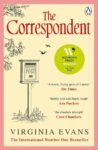
The Correspondent by Virginia Evans: A Debut That Took the Long Way to the Top
Virginia Evans had written seven novels before this one, and none of them sold. That’s not a humble-brag detail from a jacket bio — it’s just what happened, for years, before her eighth manuscript quietly became the biggest literary story of the decade. It came out in April, didn’t crack the bestseller list until December, and then didn’t just make it — it won the Women’s Prize for Fiction, picked up a PEN/Hemingway Award, sold past two million copies, and now has a Jane Fonda film adaptation in the works. Slow-burn success stories like that almost never happen anymore in publishing. I wanted to know what was actually on the page that did this.
The setup is simple enough to explain in a sentence: Sybil Van Antwerp is seventy-three, going blind, and writes letters to everyone in her life — her kids, an ex-sister-in-law, a nosy journalist, her doctor, a gardening club she has strong feelings about. The whole novel is built from these letters and emails, nothing else. No narrator stepping in to fill gaps, no scenes played out in real time. You get Sybil only through what she chooses to write, and to whom, and — this is the part that makes the book actually work — through what she conspicuously never mentions to certain people at all.
There’s one letter in particular she’s never sent. It’s about the worst period of her life, and whether she’ll finally write it is what the whole book is quietly building toward underneath all the sharper, funnier correspondence about neighbors and suitors and gardening feuds.
I went in a little skeptical of the letters-only format — it’s the kind of structural choice that can feel like a gimmick if the writer doesn’t have anything to actually do with it. Evans does. The gaps between what Sybil writes and what she avoids writing are doing as much work as the letters themselves, and once you notice that, you start reading her correspondence the way you’d read a friend’s texts, looking for what’s missing as much as what’s there.
What surprised me most was how funny it is for a book that ends up hitting as hard as it does. Sybil is sharp, a little imperious, aware of her own personality in a way that sneaks up on you slowly. A less confident writer would have let “witty old woman writes letters” curdle into something cute. This never does. By the time the book earns its harder moments — and multiple reviewers have mentioned crying more than once reading it, which tracks — it’s because you’ve spent enough pages inside a genuinely specific, difficult, magnetic person that watching her finally reconsider a story she’s told herself for decades actually lands.
One honest caveat: if you read fiction mainly for plot momentum, this will feel slow. Nothing here escalates scene to scene. It’s an accumulation of voice and small revealed detail rather than incident, and because you only ever get Sybil’s side of every exchange, some of the relationships around her stay a little more distant than you might want. If epistolary novels have never worked for you before, I don’t think this one will be the exception — it’s an excellent version of the format, but it’s still asking you to accept the format’s limits.
I’d put this at 4.8 out of 5. It’s rare for a book to earn this specific a pile of validation — a major prize, a prestigious debut award, two million readers, a film deal — for something this quiet and unhurried. Having actually read it, I think it earns every bit of that. Sybil Van Antwerp is a genuinely great character, and the slow reveal of what she’s spent decades avoiding is worth every bit of patience the book asks for.
Buy The Correspondent here: GET DEAL